
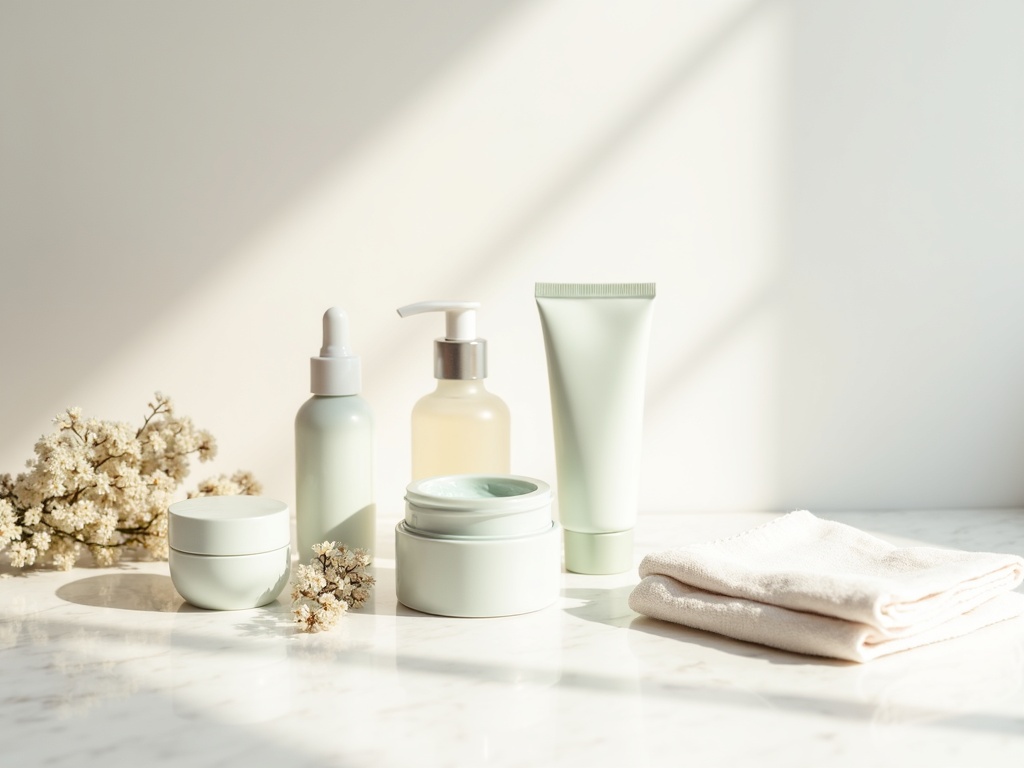
The Essential Guide to Building a Minimalist Skin Care Routine That Actually Works
The skin care industry thrives on selling complicated solutions. It tricks you into believing that the more steps, actives, and products you use, the better your skin will be. But it’s not just about your appearance; minimalism works because it is scientifically proven that simplifying your routine is more likely to give you healthy skin than complicated regimes.
Overloading the skin with multiple actives disrupts its natural barrier function, leading to sensitivity, inflammation, and – ironically – the very problems you were trying to solve. A well-chosen routine will consistently outperform a ten-step regimen built on impulse and marketing.
The Core Three: What Your Skin Actually Needs
All you need for a good skin care routine are these three basics – a cleanser, a good moisturizer, and a sunscreen. Everything else is a luxury, or in some cases, counterproductive. Your cleanser shouldn’t give your acid mantle – the thin protective barrier at pH 5.5 that fends off bacteria and retains moisture – more than a gentle workout. Lose that and you’re not starting from scratch. You’re starting from a damaged point.
Moisturizer? Look at the label: is it packed with humectants, the kind of ingredients that draw moisture into your skin, like HA? Or is it full of occlusives that trap existing moisture, like shea butter or beeswax? You ideally want something that does both, or two simple products that do one each.
Sunscreen should be the capstone of the pyramid in the morning, every morning. Not because it’s a trend that will eventually be replaced by the next breakthrough ingredient, but because UV damage is responsible for the vast majority of the visible aging that a high-end serum can later only do so much to fix.
Skin Fasting: Letting Your Barrier Repair Itself
"Skin fasting" may sound trendy, but stripping back your routine can be beneficial. By minimizing the number of products your skin has to deal with, you give it a chance to find balance and repair itself. And that’s something your skin can’t do when it’s under assault from your cleanser, toner, exfoliator, and five different actives.
Product overload is a common cause of sensitive skin, with roughly half of sensitive skin patients citing overuse of product as one of their primary triggers, according to a study in the Journal of Clinical and Aesthetic Dermatology. That’s not half of patients with sensitive skin. That’s half of patients with sensitive skin and half of the patients who believe they have sensitive skin.
Taking a break – even just for two to three weeks, using just three products: cleanser, moisturizer, and SPF – can help you see more clearly which products were helping and which were the cause of your redness, peeling, or tightness. Inflammaging, the chronic low-grade inflammation caused by repeated chemical exposure, rarely looks dramatic. It shows up as dullness, texture, and sensitivity you’ve learned to manage with more products.
Active Fatigue Is Real – And Avoidable
Let’s say you start with nightly retinol. After a month you try a vitamin C serum one morning a week. After a month of that, you’re so excited by your glow that you decide to add weekly AHAs.
No. Slow down. Your skin doesn’t know what hit it. Stick with once-a-week vitamin C for a month. Then, if you wish, try once-a-week acid. Skin is a long game. You spend years showing sun damage. You’re not going to fix it in a week.
Think of each new active as a variable in an experiment. If you introduce multiple products within a short window and your skin reacts – whether that’s dryness, breakouts, or irritation – you’ll have no way of identifying the cause. A measured approach isn’t just about giving your skin time to adjust; it’s about giving yourself the information you need to make smart decisions. One new product, one month, one assessment. Then, and only then, consider what comes next.
Multi-Purpose Products As The Smarter Alternative
A medicine cabinet full of specialized products – eye cream, lip treatment, barrier repair serum, overnight mask – creates complexity that’s hard to maintain and easy to get wrong. One well-formulated, multi-purpose product can handle several of those jobs.
This is where botanical formulations earn their place. Plant-derived compounds like calendula and comfrey have been used for skin repair for centuries, and they work across multiple conditions: dry patches, minor irritation, rough texture. A product like organic herbal salve can replace two or three single-use treatments while keeping your ingredient list short and recognizable.
Ingredient transparency matters. A five-ingredient balm you can read and understand is easier to troubleshoot than a 30-ingredient formula with three different preservative systems. Non-comedogenic botanical bases won’t block pores, and they don’t require a chemistry background to evaluate.
How To Actually Build The Routine
Simplify your routine by sticking to your core three products. Test them out over a few weeks before you introduce anything else. If and when you do add something new, try it out for at least three weeks before you decide if it’s working for you or not.
When using products for specific concerns like a sudden breakout, dryness, or irritation, opt for a simple multi-functional product that you already know works for you, instead of trying something new and specific.
Rather than a 10-step routine that makes you think that the more you pile on, the better you’ll look, what you should be focusing on is a routine that helps protect and support your skin barrier. This is not an easy concept to market, but it’s solid biology. The more functional and robust your skin barrier is, the more protected your skin will be from dehydration and environmental damage, and the healthier your skin will look.